

What You'll Learn
- Why Your Skin Became Dehydrated (Not What You Think)
- How Face Oils Work Differently Than Moisturizers
- The 5 Key Ingredients to Look For in Face Oils
- Oil Layering: The Application Method That Changes Everything
- Common Mistakes That Make Dehydrated Skin Worse
- How to Use Face Oil for Dehydrated Skin (Step-by-Step)
- Frequently Asked Questions
Why Your Skin Became Dehydrated (Not What You Think)
Here is the confusion that costs most people months of frustration: dehydrated skin is not the same as dry skin. Dry skin lacks sebum—it is a skin type you are born with, determined by how much natural oil your sebaceous glands produce. Dehydrated skin lacks water—it is a temporary condition caused by what you are doing to your skin or what your environment is doing to it.
You can have oily skin and still be dehydrated. You can be slathering on thick creams every night and still wake up with tight, flaky patches. The root issue is not a lack of moisturizer. It is a compromised moisture barrier that cannot hold onto the water your skin cells need to function.
What breaks down that barrier? Over-cleansing with harsh surfactants. Hot showers. Alcohol-based toners. Retinoids and acids without proper buffer products. Indoor heating in winter. Air conditioning in summer. Airplane cabins. Even stress—cortisol disrupts the lipid production that keeps your stratum corneum intact.
Quick Check: Dehydrated skin often feels tight 20 minutes after cleansing, shows fine surface lines that disappear when you press the skin, and may produce excess oil as your skin overcompensates for water loss. These are not the same as the deep expression lines or consistently low sebum production of dry skin.
The science is straightforward: your outermost skin layer, the stratum corneum, functions like a brick wall. The "bricks" are dead skin cells called corneocytes. The "mortar" is a mixture of ceramides, cholesterol, and fatty acids—collectively called lipids. When this mortar is intact, it prevents transepidermal water loss (TEWL). When it is damaged, water evaporates from the deeper layers faster than your body can replace it.
Face oils do not add water. They add the lipids your barrier needs to trap the water that is already there—or that you layer underneath. This is why oil alone will not fix dehydrated skin. But the right oil, applied correctly, becomes the missing piece that finally allows your skin to heal.
How Face Oils Work Differently Than Moisturizers
Moisturizers and face oils are not interchangeable. They serve different biological functions, and understanding this distinction changes how you treat dehydrated skin.
Most moisturizers are emulsions—water and oil mixed together with emulsifiers to create a cream or lotion. They deliver humectants like hyaluronic acid or glycerin, which pull water into the skin, and they include occlusives that sit on the surface to reduce evaporation. But the emulsifiers and preservatives required to keep water and oil stable in the same bottle can irritate sensitized, dehydrated skin.
Face oils are pure lipids. No water, no emulsifiers, no need for synthetic preservatives if they are formulated correctly. When you apply an oil to damp skin, it does not just sit on top. Depending on the molecular weight and fatty acid profile, the oil penetrates the intercellular spaces of the stratum corneum and reinforces the lipid mortar that has been stripped away.
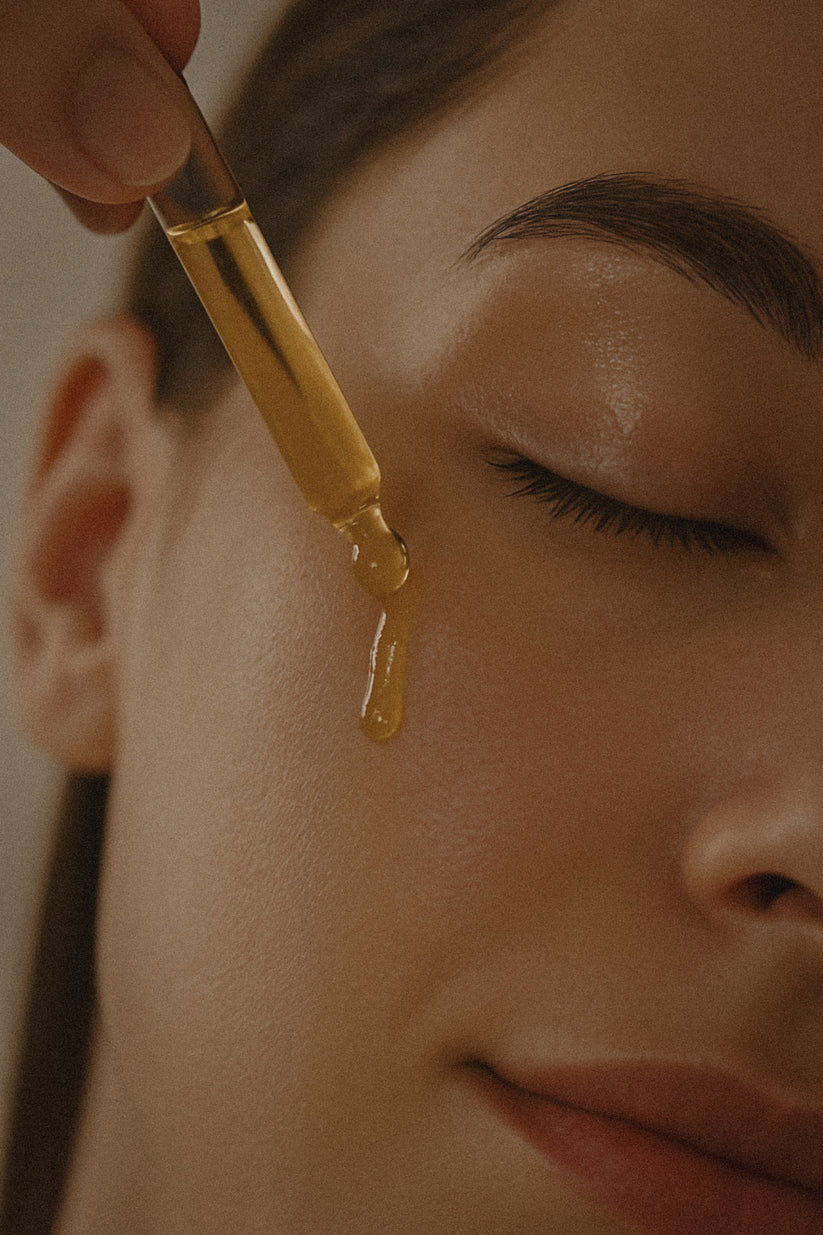
There is another advantage: face oils are lipophilic, meaning they dissolve in fat, not water. Many active ingredients—like fat-soluble vitamins A, D, E, and K, plus antioxidants like astaxanthin and CoQ10—are better delivered in an oil base. They stay stable, penetrate deeper, and are less likely to oxidize before they reach the cells that need them.
The best approach for dehydrated skin is not oil versus moisturizer. It is oil after a water-based hydrator. This layering technique—sometimes called the "sandwich method"—allows you to address both the water deficiency and the lipid deficiency. You add water (through a hydrating toner or essence), trap it with oil, and optionally seal everything with a lightweight moisturizer if your skin is extremely compromised.
This is why a single product rarely solves chronic dehydration. Your skin needs multiple types of molecules working in sequence. The oil is the step most people skip—and often the one that makes the difference between temporary relief and lasting barrier repair.
The 5 Key Ingredients to Look For in Face Oils
Not all oils are created equal when it comes to dehydrated skin. You need specific fatty acid profiles that mimic what your barrier is missing. Here is what to look for—and why it matters biologically.
1. Jojoba Oil
Technically a liquid wax ester, not a triglyceride. Jojoba is the closest botanical match to human sebum, which is why your skin recognizes it and absorbs it without sitting greasy on the surface. It is rich in omega-9 fatty acids, vitamin E, and phytosterols that calm inflammation. For dehydrated skin, jojoba does something critical: it signals to your sebaceous glands that enough oil is present, which can reduce the overproduction that happens when your skin panics over water loss.
2. Rosehip Seed Oil
Cold-pressed rosehip oil contains a rare balance of omega-3 (alpha-linolenic acid) and omega-6 (linoleic acid) fatty acids, both of which are essential—your body cannot synthesize them. These fatty acids integrate directly into cell membranes and improve skin barrier function at the structural level. Rosehip also delivers natural trans-retinoic acid (vitamin A), which supports cell turnover without the irritation of synthetic retinoids. This makes it ideal for dehydrated skin that is also dealing with dullness or fine lines.
3. Pomegranate Seed Oil
One of the few plant sources of punicic acid, a conjugated fatty acid with potent anti-inflammatory and antioxidant properties. Pomegranate seed oil is deeply hydrating without being heavy, and it has been shown to promote keratinocyte proliferation—the process of generating new skin cells. For a compromised barrier, this means faster repair. It also scavenges free radicals that accelerate moisture loss and collagen breakdown.
4. Squalane (Plant-Derived)
Squalane is a hydrogenated form of squalene, a lipid your body naturally produces but makes less of as you age. Plant-derived squalane (from olives or sugarcane) is shelf-stable and biomimetic—your skin uses it as if it made it itself. It is extremely lightweight, non-comedogenic, and excellent at preventing TEWL because it spreads into a thin, breathable film. If you have dehydrated skin that is also prone to congestion, squalane is non-negotiable.
5. Vitamin E (Tocopherols)
Not an oil itself, but a fat-soluble antioxidant that should be present in any high-quality face oil blend. Vitamin E protects the fatty acids in the oil from oxidizing (going rancid), and it protects your skin's lipids from oxidative stress caused by UV, pollution, and inflammation. It also has mild occlusive properties, meaning it helps lock in the moisture you have layered underneath the oil.
What to Avoid: Mineral oil and petroleum derivatives—they occlude but do not nourish. Fragrance oils and essential oils in high concentrations—they can further irritate a compromised barrier. Coconut oil—comedogenic for many people and too high in lauric acid, which can be inflammatory for facial skin.
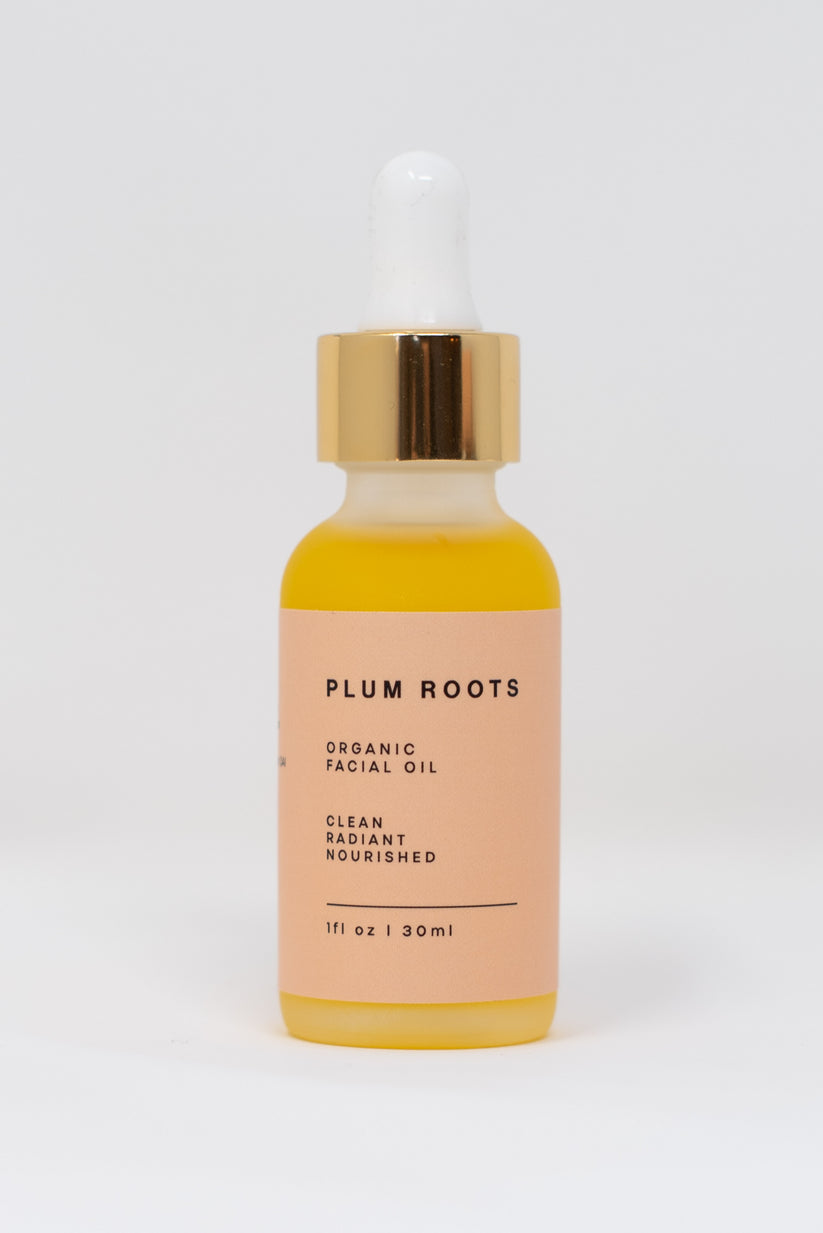
The Plum Roots Organic Facial Oil combines jojoba, rosehip, and pomegranate seed oils in a certified organic, cold-pressed formula. No fillers, no synthetic fragrance—just the lipids your barrier is asking for.
Oil Layering: The Application Method That Changes Everything
Most people apply face oil incorrectly—and then conclude that oils do not work for them. The timing, the order, and even the amount of pressure you use determine whether the oil absorbs or just sits on the surface looking shiny.
The principle is simple: oils are hydrophobic. They repel water. If you apply oil to dry skin, you create a barrier before any water-based ingredients can penetrate. But if you apply oil to damp skin that already has water-based serums or toners on it, the oil traps that hydration and forces it into the deeper layers of the stratum corneum. This is called occlusive layering, and it is the method that finally makes dehydrated skin hold onto moisture.
Here is the sequence that works:
Step 1: Cleanse gently. Use a sulfate-free, low-pH cleanser with lukewarm water. Pat your face with a towel until it is damp but not dripping. Do not dry it completely. That damp surface is what the oil will seal in.
Step 2: Apply a hydrating toner or essence. Something water-based with humectants—hyaluronic acid, glycerin, aloe. This adds the water molecule component that dehydrated skin lacks. Press it in with your palms; do not use a cotton pad, which wastes product.
Step 3: Immediately apply 3-5 drops of face oil. Warm the oil between your palms for a few seconds—this lowers the viscosity and makes it spread more easily. Press the oil into your skin using gentle upward and outward motions. Do not rub aggressively. You are not trying to force it in; you are guiding it into the intercellular spaces.
Step 4 (optional but powerful): Use facial cupping or gua sha. With the oil still on your skin, use a facial cupping set to create gentle suction across your cheeks, jawline, and forehead. The negative pressure increases microcirculation and pushes the oil deeper into the dermis. This is not just about absorption—it is about activating the lymphatic system to remove the fluid congestion that makes dehydrated skin look puffy and dull.
Step 5 (if needed): Seal with a lightweight moisturizer. If your skin is severely dehydrated, you can layer a water-based gel moisturizer over the oil. This creates an oil-water-oil sandwich that maximizes barrier repair. It sounds counterintuitive—moisturizer after oil—but the oil allows the moisturizer to sit on a stable lipid layer and work more effectively.
The entire process takes five minutes. Do it twice a day—morning and night—and most people see a measurable improvement in skin texture and hydration within seven days. That is not marketing language. That is how long it takes for a full cycle of corneocyte turnover in the stratum corneum when you give your barrier the building blocks it needs.
Common Mistakes That Make Dehydrated Skin Worse
Even when people start using face oils, they often undermine the results with habits that continue to damage the barrier. Here are the mistakes that keep dehydrated skin stuck in a cycle of tightness and flaking.
Using Too Much Product
More is not better with face oils. Your skin can only absorb so much at once. If you use more than 5-6 drops, the excess sits on the surface and oxidizes, which can actually trigger inflammation. Start with 3 drops and add one more if your skin still feels tight after absorption.
Skipping the Water Step
Oil without water is just an occlusive sitting on a dry surface. It will make your makeup slip around and your skin feel slick, but it will not fix dehydration. Always apply oil to damp skin or over a water-based hydrator. If you are using oil in the morning, you can mist your face with thermal water or a hydrating spray before applying the oil.
Over-Exfoliating
Acids and physical scrubs strip the lipid layer that face oils are trying to rebuild. If you are using a retinoid, glycolic acid, or salicylic acid, you need to buffer with oils and reduce frequency—not add more exfoliation because your skin is flaking. The flakes are a symptom of barrier damage, not a sign that you need more exfoliation.
Using Hot Water
Heat dilates capillaries and strips lipids faster than anything else you do in your routine. Wash your face