
What You'll Learn
If you have oily skin, you've probably been told to avoid oil at all costs. Foaming cleansers. Mattifying lotions. Blotting papers in your bag. And yet, your skin still feels like it could fry an egg by 2 PM.
Here's what the skincare industry doesn't always tell you: oily skin isn't producing too much oil because it wants to. It's producing too much oil because it's been stripped, stressed, and signaled into overdrive. Your sebaceous glands are responding to a deficit, not an excess.
This is where face oil for oily skin stops sounding like a contradiction and starts sounding like the missing piece. Not just any oil, specific oils that work with your skin's natural chemistry, not against it. Let's talk about what actually happens beneath the surface, why botanical oils can recalibrate sebum production, and how to use them without turning your face into a slip-and-slide.
Why Face Oil Works on Oily Skin (The Biology)
Your sebaceous glands produce sebum, an oily, waxy substance that's supposed to protect and moisturize your skin. When your skin senses it's dehydrated or lacking lipids, it compensates by producing more sebum. This is called a feedback loop, and it's why harsh, oil-stripping products often backfire.
When you apply the right face oil, you're essentially telling your skin: "We're good. You don't need to overproduce." Over time, your sebaceous glands begin to regulate themselves. The result? Less midday shine, fewer clogged pores, and a complexion that feels balanced instead of either bone-dry or slick.
Key Insight: Sebum regulation is a biological feedback mechanism. Face oils rich in linoleic acid (like rosehip and jojoba) have been shown to reduce sebum thickness and improve skin barrier function, critical for oily, acne-prone skin types.
But here's the nuance: not all oils are created equal. Some are comedogenic (pore-clogging), others are too heavy, and a few are molecularly structured in ways that actually mimic your skin's natural oils. That's where ingredient intelligence comes in.
Ingredient Intelligence: What to Look For in Face Oil for Oily Skin
The difference between a face oil that transforms your skin and one that turns you into a grease slick comes down to molecular weight, fatty acid composition, and comedogenic rating. Here's what matters:
1. Jojoba Oil: The Sebum Mimic
Jojoba oil isn't technically an oil, it's a wax ester, which makes its molecular structure nearly identical to human sebum. This is why it absorbs so quickly and rarely causes breakouts. When your skin senses jojoba, it often reduces its own oil production because it "thinks" it's already produced enough. Comedogenic rating: 2 (low to moderate risk).
2. Rosehip Seed Oil: Vitamin A Without the Prescription
Rosehip oil is naturally high in trans-retinoic acid (a form of vitamin A) and linoleic acid. For oily skin that's also dealing with texture, hyperpigmentation, or congestion, rosehip helps resurface and refine without irritation. It's lightweight, fast-absorbing, and non-comedogenic. Comedogenic rating: 1 (very low risk).
3. Watermelon Seed Oil: Lightweight and Linoleic-Rich
High in linoleic acid and antioxidants, watermelon seed oil is one of the lightest oils available. Studies have linked linoleic acid deficiency to oily, acne-prone skin, adding it back topically can help normalize sebum composition. Comedogenic rating: 0-1.
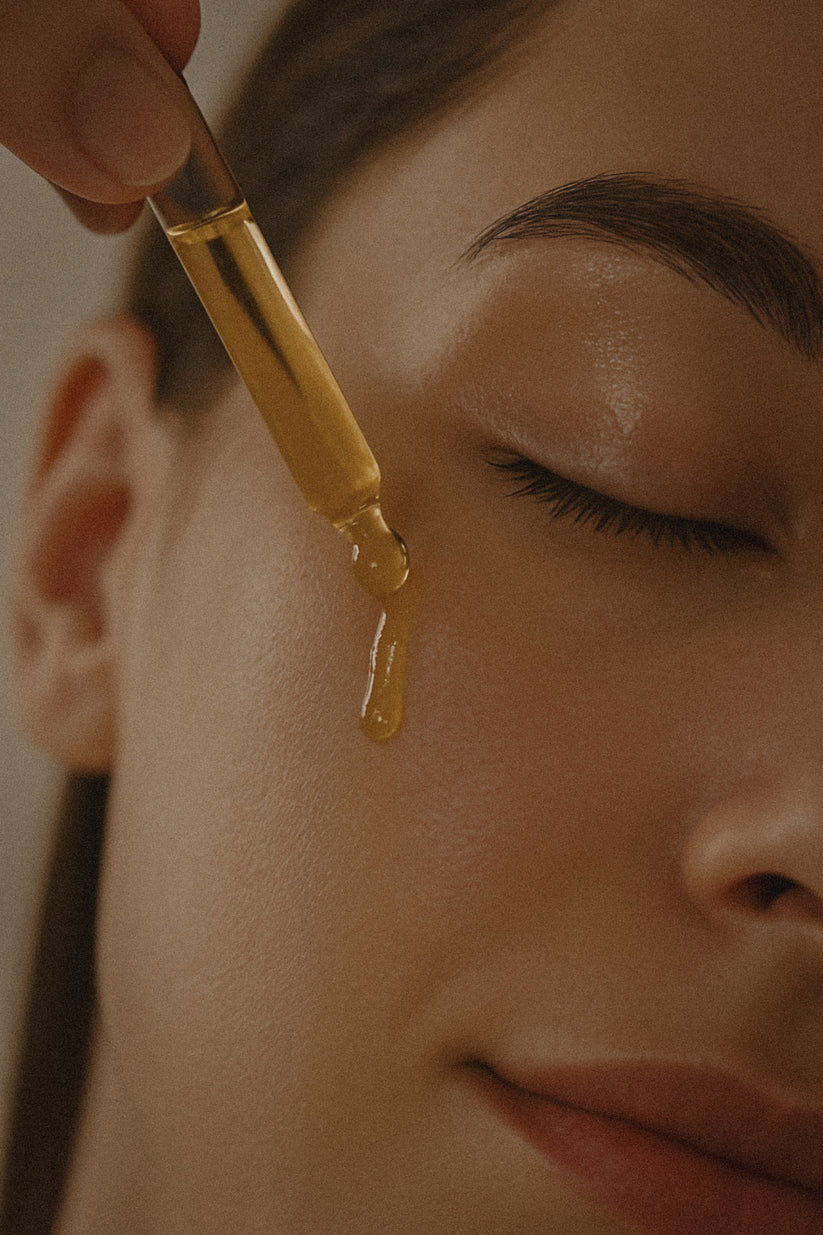
4. Pomegranate Seed Oil: The Anti-Inflammatory Powerhouse
Rich in omega-7 fatty acids, sea buckthorn soothes inflammation and supports skin barrier repair. For oily skin that's also sensitive or reactive, this ingredient calms redness while delivering moisture. Comedogenic rating: 1.
What to Avoid
- Coconut oil: Comedogenic rating of 4, likely to clog pores and cause breakouts on oily skin.
- Palm oil: Heavy, occlusive, and not ideal for facial use on oily types.
- Wheat germ oil: Thick texture, higher comedogenic rating, better suited for dry skin.
- Synthetic fragrance: Can irritate and trigger excess oil production as a stress response.
The Plum Roots Organic Facial Oil Difference
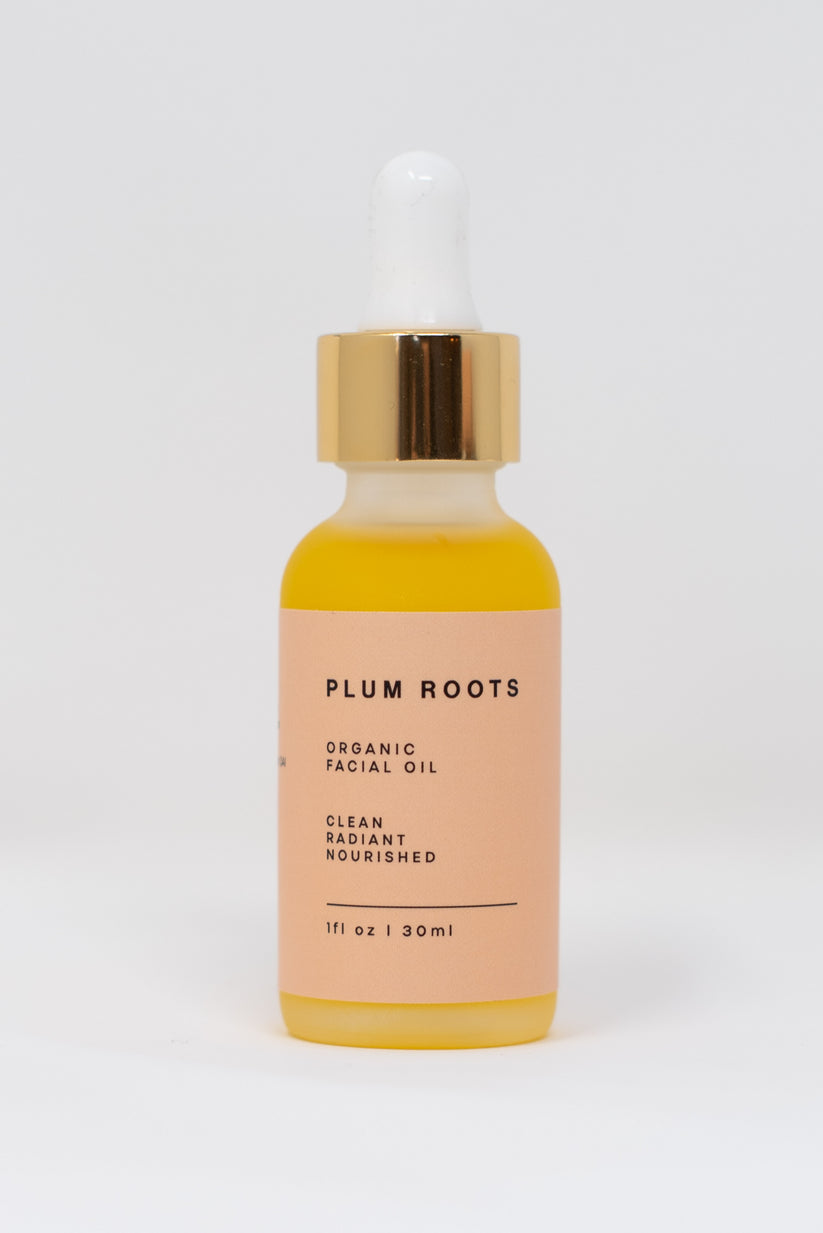
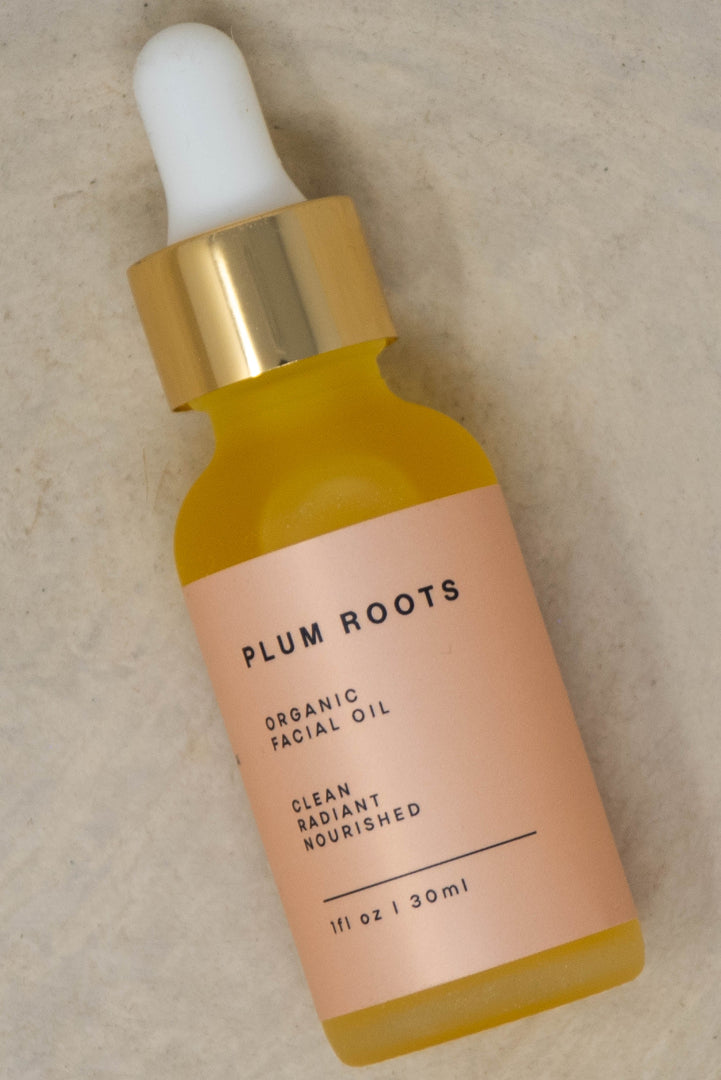
This is where philosophy meets formulation. At Plum Roots, we don't add fillers, synthetic fragrances, or anything your skin has to work around. Our Organic Facial Oil is built around the principle that skin knows what to do with real, botanical ingredients, it just needs the right ones.
Here's what's inside:
- Organic jojoba oil: Balances sebum, absorbs quickly
- Organic rosehip seed oil: Refines texture, evens tone, delivers natural vitamin A
- Organic pomegranate seed oil: Anti-inflammatory, barrier-supportive, deeply hydrating
- Organic watermelon seed oil: Lightweight hydration, linoleic acid boost
- Vitamin E (non-GMO): Antioxidant protection
No parabens. No phthalates. No petroleum derivatives. Just ingredients your skin can recognize, use, and respond to. This is clean skincare that doesn't compromise on performance.
And because it's formulated specifically for sensitivity and balance, it works beautifully on oily skin that's been overworked by harsh products. You're not adding more stress, you're adding support.
How to Use Face Oil for Oily Skin (Morning and Evening Protocols)
Application matters as much as formulation. If you're using too much, applying to dry skin, or layering incorrectly, even the best face oil can feel greasy. Here's the method:
Morning Routine
- Cleanse: Use a gentle, non-stripping cleanser. Your skin should feel clean but not tight.
- Tone (optional): If you use a hydrating toner or essence, apply it while skin is still damp.
- Apply face oil: Dispense 2-3 drops into your palm. Rub hands together to warm the oil. Press (don't rub) into slightly damp skin, starting at the center of your face and working outward.
- Wait 60-90 seconds: Let the oil absorb before applying SPF. This prevents pilling and ensures even coverage.
- SPF: Non-negotiable. Choose a lightweight, mineral-based sunscreen if your skin is oily.
Evening Routine
- Double cleanse: Remove makeup/SPF with a cleansing oil or balm, then follow with your regular cleanser.
- Apply actives (if using): If you use a serum with niacinamide, hyaluronic acid, or other water-based actives, apply those first on damp skin.
- Apply face oil: 3-4 drops, warmed in your palms, pressed into skin.
- Optional: Facial cupping: This is when you layer in lymphatic drainage for deeper absorption and circulation boost (more on this below).
Pro Tip: If your skin feels greasy after 10 minutes, you're using too much. Start with 2 drops and increase only if needed. Oily skin typically needs less product, not more.
Pairing Face Oil with Facial Cupping for Oily Skin
Here's where traditional wellness meets modern skincare strategy. Facial cupping, a practice rooted in Traditional Chinese Medicine uses gentle suction to increase microcirculation, encourage lymphatic drainage, and help skincare products penetrate more effectively.
For oily skin, this combination is particularly powerful. Stagnant lymph and poor circulation can contribute to congestion, puffiness, and dullness, all common complaints even when your skin feels oily. Facial cupping helps move that stagnation.
How to Pair Them
- Apply 3-4 drops of face oil to clean, slightly damp skin.
- Use small or medium silicone facial cupping tools (avoid glass if you're new to the technique, silicone is more forgiving).
- Squeeze the cup, place it on your skin, and release to create gentle suction.
- Glide the cup along lymphatic pathways: jawline to ear, cheekbone to temple, forehead outward toward hairline.
- Work for 3-5 minutes, 3-4 times per week. You should see slight pinkness (increased circulation), but never bruising.
The oil acts as a slip agent so the cups glide smoothly, and the suction helps the botanical actives penetrate deeper into the skin. You're essentially giving your skin a workout and a treatment at the same time.
Common Mistakes That Worsen Oiliness (And What to Do Instead)
Even with the right products, technique matters. Here are the missteps we see most often and how to course-correct.
Mistake #1: Using Face Oil on Bone-Dry Skin
Oil on completely dry skin can sit on the surface rather than absorb. Always apply to slightly damp skin, this creates an emulsion effect that helps the oil sink in and lock in hydration.
Mistake #2: Over-Cleansing
Cleansing twice a day with a foaming, sulfate-based cleanser strips your skin and triggers rebound oil production. Switch to a gentle, pH-balanced cleanser morning and night. Save the deep clean for evening only, and use a splash of water or micellar water in the morning.
Mistake #3: Skipping Moisturizer Because You Used Oil
For some oily skin types, face oil alone is enough. For others, especially if you live in a dry climate or use actives like retinoids, you may still need a lightweight, water-based moisturizer on top. Listen to your skin. If it feels tight an hour after applying oil, add a gel moisturizer.
Mistake #4: Using Too Much Product
More is not better. Start with 2-3 drops. You can always add more, but you can't take it back once it's on your face. Oily skin often needs less product to feel nourished.
Mistake #5: Expecting Instant Results
Sebum regulation takes time, usually 7-14 days to notice a shift, and 4-6 weeks to see full results. Stick with it. Your skin is recalibrating years of overdrive.
Shop the Ritual
Experience the difference of clean, organic face oil formulated for balance—not just hydration.
Organic Facial Oil