
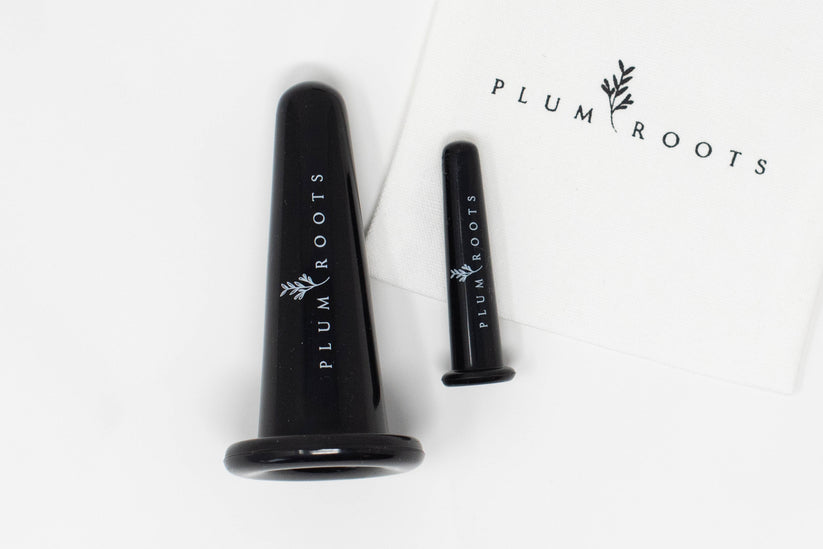
If someone told you five years ago that you'd be placing suction cups on your face as part of your morning routine, you might have laughed. Yet here we are and once you understand what facial cupping actually does beneath your skin, it stops sounding strange and starts sounding obvious.
Facial cupping isn't a trend borrowed from spa menus. It's a traditional Chinese healing practice that has been used for thousands of years to move stagnant energy, release tension, and improve circulation. The face was treated with the same respect as the rest of the body because tension, fluid retention, and blocked pathways show up there too.
What makes facial cupping different from the tools that have flooded the wellness market is its mechanism. This isn't about pressure or scraping. It's about suction, a gentle lift that creates space between layers of tissue, encourages lymphatic drainage, and releases the fascia that has been gripping your facial muscles without you realizing it.
Your face holds more tension than you think. Every email you didn't want to send, every conversation that required a smile you didn't feel, every night you clenched your jaw in your sleep, it all gets stored in the tiny muscles of your face. And unlike the rest of your body, your face doesn't get stretched, massaged, or moved with intention very often.
Facial cupping gives your lymphatic system the nudge it has been waiting for. It's simple, fast, and once you feel the difference in your face after just a few days, you'll understand why this practice never disappeared.
What Is Facial Cupping and Where It Comes From
Facial cupping is a skincare and wellness practice rooted in Traditional Chinese Medicine (TCM). It uses small glass or silicone cups to create suction on the skin, which lifts tissue, increases blood flow, and stimulates the movement of lymph fluid beneath the surface.
Unlike body cupping, which often leaves circular marks and uses stationary cups, facial cupping involves gentle gliding motions. The cups are smaller, the suction is lighter, and the goal is drainage and release, not deep tissue work.
In TCM, stagnation is considered a root cause of many imbalances. When energy (qi) or fluid becomes stuck, it manifests as puffiness, dullness, tension, or discomfort. Cupping was developed as a way to move what had become stagnant, whether that was blood, lymph, or energy.
The face, in this philosophy, is a map of your internal health. Puffiness under the eyes might indicate kidney stress. Jaw tension might reflect digestive stagnation. A dull complexion could signal poor circulation. Facial cupping was used not just for beauty, but as a diagnostic and therapeutic tool.
Modern facial cupping borrows this ancient wisdom but applies it with a focus on lymphatic drainage, muscle relaxation, and facial sculpting. The organic facial cupping tools we use today are designed to be safe, effective, and easy to incorporate into a daily routine, no acupuncture knowledge required.
Key Insight: Facial cupping doesn't change the bone structure of your face. It changes the tissue on top of it, releasing tension, draining fluid, and restoring circulation to areas that have become stagnant.
How Facial Cupping Works on Your Lymphatic System
To understand what facial cupping does, you need to understand what your lymphatic system does and why your face needs help moving lymph fluid.
Your lymphatic system is a network of vessels that runs parallel to your bloodstream. Its job is to collect waste, toxins, excess fluid, and cellular debris, then transport it to lymph nodes where it can be filtered and eliminated. Unlike your circulatory system, which has your heart to pump blood, your lymphatic system has no pump. It relies on movement, muscle contractions, deep breathing, and manual stimulation to move fluid through the body.
Your face has a high concentration of lymph nodes, particularly around the jawline, behind the ears, and down the neck. But facial muscles are small, and most of us don't move them with much range or intention throughout the day. We're not chewing tough foods, making exaggerated expressions, or engaging the full musculature of the face.
The result? Lymph fluid pools. It sits under your eyes, along your jawline, in the hollows of your cheeks. This shows up as puffiness, under-eye bags, a soft jawline, or a general feeling of heaviness in your face, especially in the morning.
Facial cupping creates suction that lifts the skin and fascia away from the underlying muscle. This lift does several things:
- It creates a pressure differential that encourages lymph fluid to move from areas of stagnation toward drainage pathways (lymph nodes).
- It increases blood circulation to the area, delivering oxygen and nutrients while removing metabolic waste.
- It releases fascial adhesions, the sticky, stuck areas where connective tissue has become tight and restrictive.
- It relaxes muscle tension held in the forehead, jaw, and around the eyes.
When you glide a cup along your jawline from chin to ear, you're following the natural drainage pathway of your lymphatic system. You're not forcing anything, you're assisting a system that was designed to move but has become sluggish due to lack of stimulation.
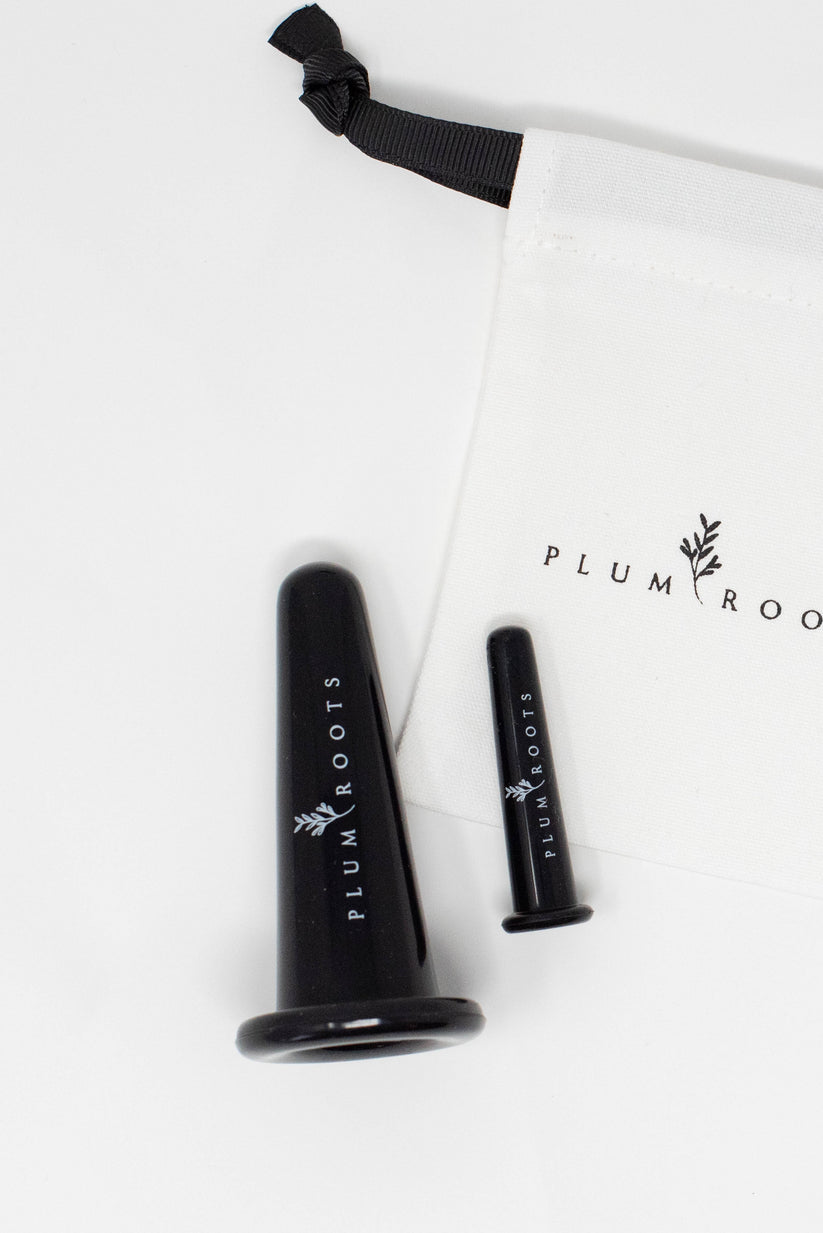
This is why facial cupping works best in the morning. Your lymphatic system slows down while you sleep, and fluid naturally accumulates in your face due to gravity and stillness. A few minutes of cupping after you wake up gives your system the manual assist it needs to clear that overnight buildup.
The Benefits You'll Actually Notice
Facial cupping isn't a miracle. It won't erase a decade of sun damage or replace the need for sleep. But what it does do and what you'll notice within the first week is restore function to systems that weren't working optimally.
Reduced Puffiness and Under-Eye Bags
This is usually the first visible change. Puffiness under the eyes and along the cheeks is almost always lymphatic stagnation. When you cup regularly, that fluid drains toward your lymph nodes and gets processed out of your system. Your face looks less swollen, more awake, and more defined.
Improved Facial Contours and Definition
When fascia is tight and lymph fluid is sitting on top of your facial muscles, your natural bone structure gets obscured. Cupping releases that tension and moves that fluid, which allows your cheekbones, jawline, and brow bone to become more visible. You're not creating new contours, you're revealing the ones that were always there.
Release of Jaw and Forehead Tension
Most of us hold chronic tension in our jaw and forehead without realizing it. This tension contributes to headaches, TMJ discomfort, and the formation of expression lines. The suction from cupping creates a release in the muscle and fascia that you can actually feel. Many people report a sense of lightness or relief after cupping areas they didn't even know were tight.
Better Product Absorption
Cupping increases circulation to the skin, which means better delivery of oxygen and nutrients from your bloodstream and better absorption of the organic facial oils and serums you apply. When you cup over oil, you're driving those ingredients deeper into the skin while also supporting the skin's own repair processes.
A Natural, Healthy Glow
Increased circulation means more blood flow to the surface of your skin. This shows up as a subtle flush, a glow that looks like you just finished a workout or spent time in fresh air. It's the kind of radiance that no highlighter can replicate because it's coming from within.
Worth Noting: Facial cupping is cumulative. You might see some immediate de-puffing after your first session, but the sculpting, tension release, and glow build over time with consistent use.
Facial Cupping vs. Gua Sha: Key Differences
If you've been in the natural skincare world for a while, you've probably encountered gua sha. Both tools work with the lymphatic system and fascia, but they do it in fundamentally different ways.
Gua sha uses a flat stone tool to apply pressure and scrape along the skin. The technique is based on compression and directional strokes that push lymph fluid toward drainage points. It's effective, but it requires a specific angle, consistent pressure, and a good understanding of facial anatomy to avoid tugging or missing key pathways.
Facial cupping uses suction to lift tissue away from the muscle, rather than pressing down into it. This creates space, encourages fluid movement through a vacuum effect, and releases fascia from below rather than from above. The learning curve is gentler, the risk of tugging is lower (as long as you're using enough oil), and the sensation is distinctly different, many people describe it as more releasing and less intense.
Here's how they compare:
- Mechanism: Gua sha compresses and pushes. Cupping lifts and pulls.
- Sensation: Gua sha feels like a firm massage. Cupping feels like a gentle vacuum and release.
- Best for: Gua sha excels at muscle tension and facial massage. Cupping excels at lymphatic drainage and fascia release.
- Ease of use: Cupping is more intuitive for beginners, just glide in the direction of lymph flow.
You don't have to choose. Many people use both gua sha for deeper muscle work and cupping for daily lymphatic maintenance. But if you're new to facial tools and your primary concern is puffiness, dullness, or a lack of definition, cupping is often the faster, more forgiving entry point.
How to Use Facial Cupping: A Simple Routine
Facial cupping doesn't require a 20-step ritual or advanced training. Once you understand the basic principle, glide the cups along lymphatic pathways from the center of your face outward and downward, the rest is intuitive.
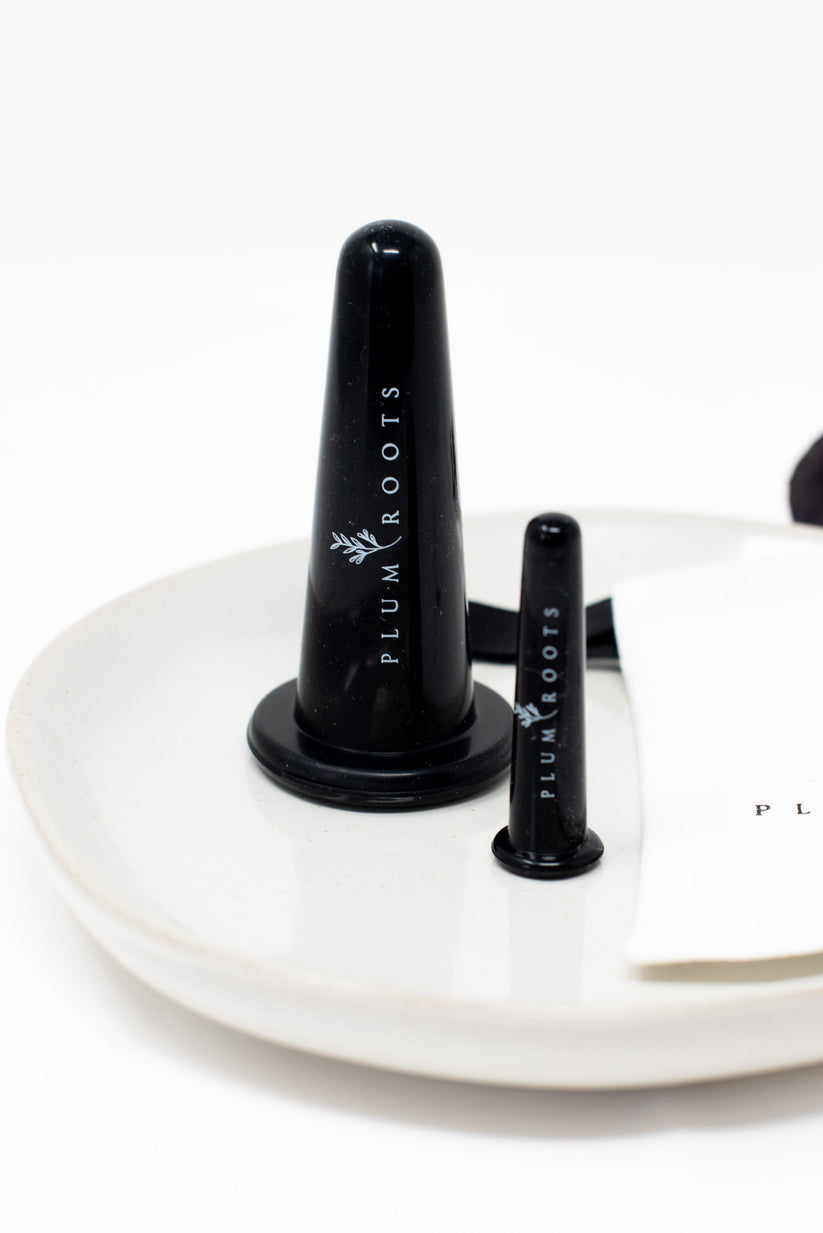
Step 1: Prep Your Skin
Start with clean, dry skin. Apply 3-4 drops of a lightweight organic facial oil to your face and neck. The oil is non-negotiable, it creates the glide you need to prevent tugging and allows the cups to move smoothly across your skin.
Step 2: Prime Your Lymph Nodes
Before you touch your face, place a cup at the base of your neck (just above your collarbone) and glide it upward toward your jawline. Repeat 3-4 times on each side. This opens up the drainage pathway at your neck, so when you move fluid from your face, it has somewhere to go.
Step 3: Work the Jawline
Squeeze the cup to create suction, place it at the center of your chin, and glide it along your jawline toward your ear. Release the suction before you lift the cup. Repeat 3-5 times on each side. This is the most dramatic area for sculpting and de-puffing.
Step 4: Lift the Cheeks
Place the cup near the corner of your nose and glide upward along your cheekbone toward your temple. This drains under-eye puffiness and defines your cheekbones. Repeat 3-5 times per side.
Step 5: Smooth the Forehead
Start at the center of your forehead (between your brows) and glide outward toward your hairline. Use light pressure here, the forehead skin is thinner. Repeat 3-4 times.
Step 6: Finish at the Neck
End where you started, glide the cup from your jawline down toward your collarbone a few more times. This ensures any fluid you moved from your face gets directed toward your lymph nodes for elimination.
The entire routine takes 3-5 minutes. You can do it every morning, or a few times per week if that feels more sustainable. Consistency matters more than duration.