
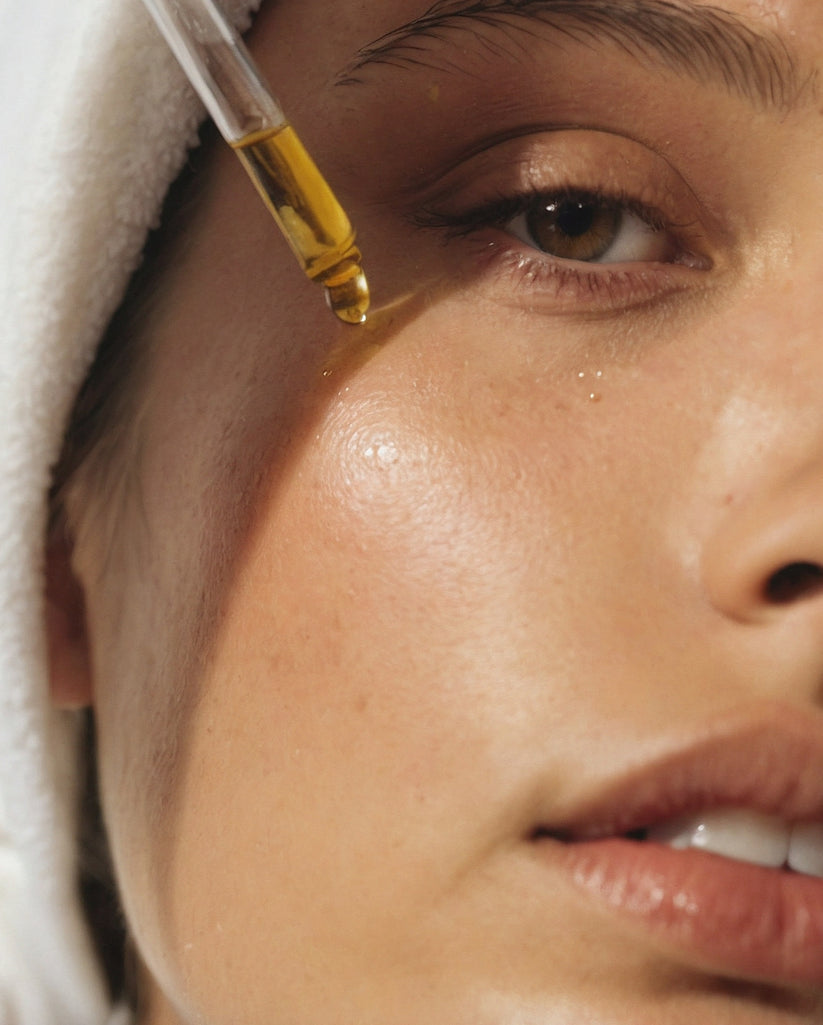
You have the tool. You know the strokes. You follow the tutorials. But if you are doing gua sha without the right face oil, you are working against your own skin.
This is not about luxury or layering products for the sake of a routine. Face oil for gua sha is functional. It creates the slip your tool needs to glide without dragging. It protects the skin barrier during repetitive strokes. And when chosen correctly, it delivers active botanicals exactly where the increased circulation can put them to work.
Most conversations about gua sha focus on technique. Fewer talk about what sits between the stone and your skin. That layer matters more than most people realize.
What We'll Cover
Why Slip Matters More Than Pressure
When you drag a gua sha tool across dry skin, you create friction. That friction disrupts the skin barrier, triggers inflammation, and defeats the entire purpose of the practice.
Traditional gua sha, as practiced in Chinese medicine, was always performed with oil or balm. The tool never touched dry skin. That was not about comfort. It was about mechanics.
Your skin has texture—pores, fine lines, natural contours. A tool moving across that terrain without lubrication catches on every microscopic variation. The repetitive catching stretches the skin unevenly, stresses collagen fibers, and can cause broken capillaries in delicate areas like under the eyes.
Face oil for gua sha eliminates that catching. It allows the tool to maintain consistent contact and pressure across the entire stroke. That consistency is what moves lymph fluid effectively and stimulates circulation without damage.
The Technical Point: Lymphatic drainage requires sustained, directional pressure. If your tool is stopping and starting due to friction, you are not creating the continuous glide needed to push fluid through lymph vessels.
Slip is not about making the tool "easier" to use. It is about making the technique work the way it was designed to work.
Absorption vs Glide: The Balance Your Skin Needs
Here is the paradox: you need the oil to stay on the surface during your gua sha routine, but you also want it to absorb afterward so your skin can use the nutrients.
Not every oil hits that balance.
Heavy oils like coconut or shea butter provide excellent slip but sit on the skin for hours. Light oils like grapeseed absorb quickly but may not last through a full routine, forcing you to reapply mid-session.
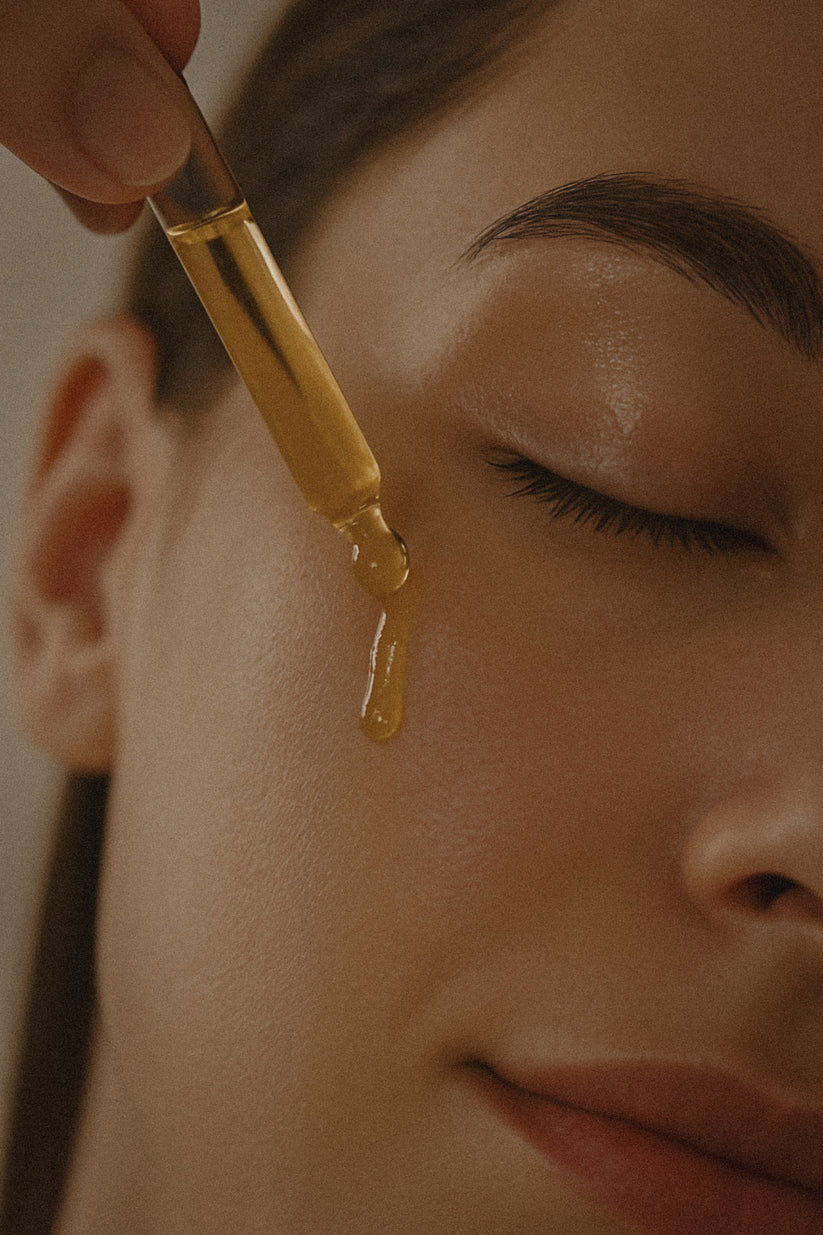
The oils that work best for gua sha have medium-weight molecules. They create a protective layer that lasts 5-10 minutes—long enough for your routine—but then penetrate the epidermis to deliver fatty acids, antioxidants, and phytonutrients.
Oils That Offer the Best Slip-to-Absorption Ratio
Jojoba oil is technically a wax ester, not a triglyceride. Its molecular structure closely mimics human sebum, which is why skin recognizes it and allows absorption without clogging pores. It provides smooth glide for 8-10 minutes before sinking in.
Squalane (the plant-derived version from olives or sugarcane) is a hydrocarbon that spreads easily and absorbs within 10-15 minutes. It is especially good for combination or oily skin types that need slip without heaviness.
Rosehip seed oil contains high levels of linoleic acid, which supports skin barrier repair. It is lighter than jojoba but still offers enough viscosity for gua sha. It absorbs relatively quickly, making it ideal for morning routines.
Argan oil has a slightly heavier feel, perfect for dry or mature skin. It provides lasting slip and contains vitamin E and essential fatty acids that benefit stressed or aging skin.
What you do not want: mineral oil (sits on the surface indefinitely), synthetic silicones (interfere with skin respiration), or fragranced oils (increase irritation risk during massage).
Choosing the Right Ingredients for Gua Sha
The increased circulation from gua sha creates what I think of as an "absorption window." For about 20-30 minutes after massage, your skin is primed to take in whatever you have applied. Blood flow is elevated. Capillaries are dilated. Cell metabolism is temporarily increased.
That makes ingredient quality critical. If you are using a face oil loaded with synthetic fragrance, preservatives, or oxidized oils, your skin will absorb those too.
This is why organic matters more for gua sha oils than for products you simply apply and leave. The mechanical action of the massage drives ingredients deeper into the skin than passive application does.
What to Look for on the Label
Organic certification ensures the plants were grown without pesticides, herbicides, or synthetic fertilizers. Those chemicals leave residues in the oils extracted from those plants.
Cold-pressed or expeller-pressed extraction preserves the fatty acid profile and antioxidant content. Heat processing degrades both, leaving you with a less effective oil.
Minimal ingredient lists are better. A face oil for gua sha does not need 15 botanicals. It needs 3-5 high-quality base oils with proven skin benefits. More ingredients mean more opportunity for sensitivity, especially when you are massaging them into your face daily.
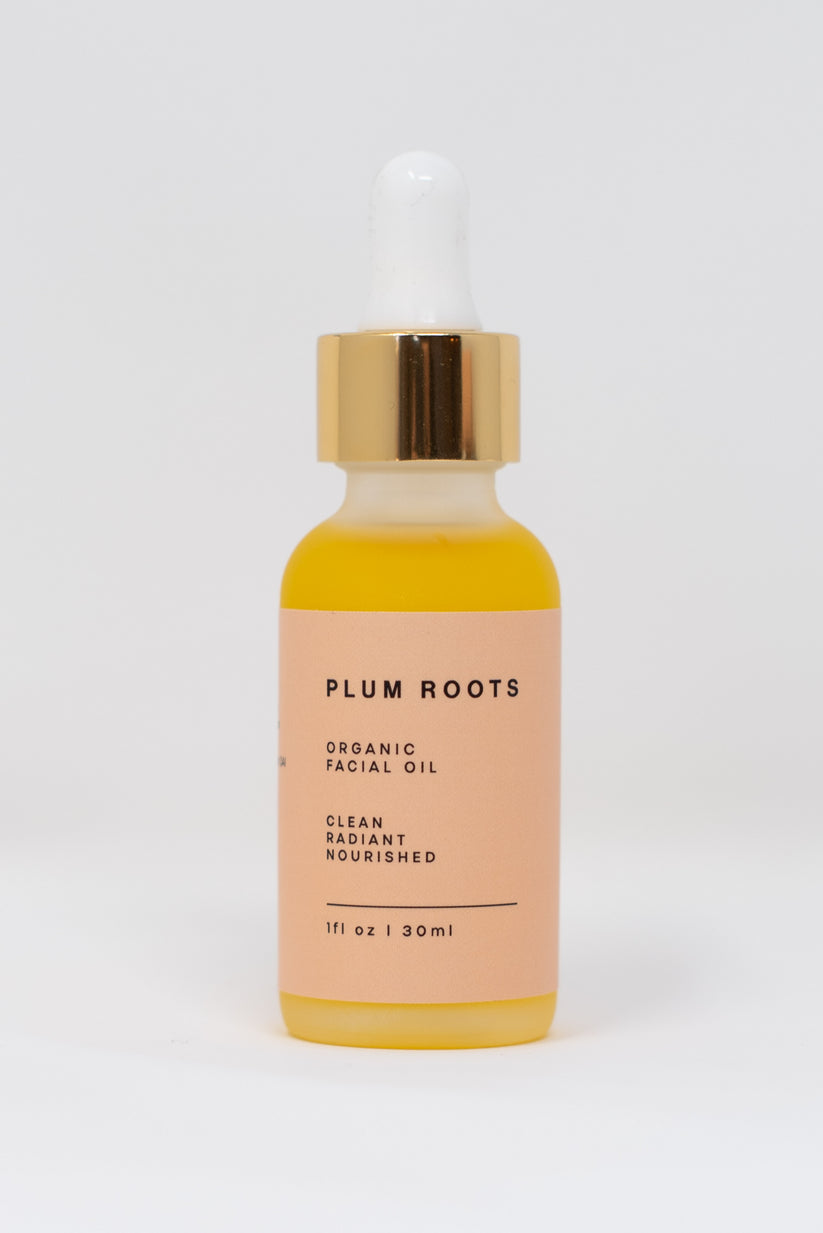
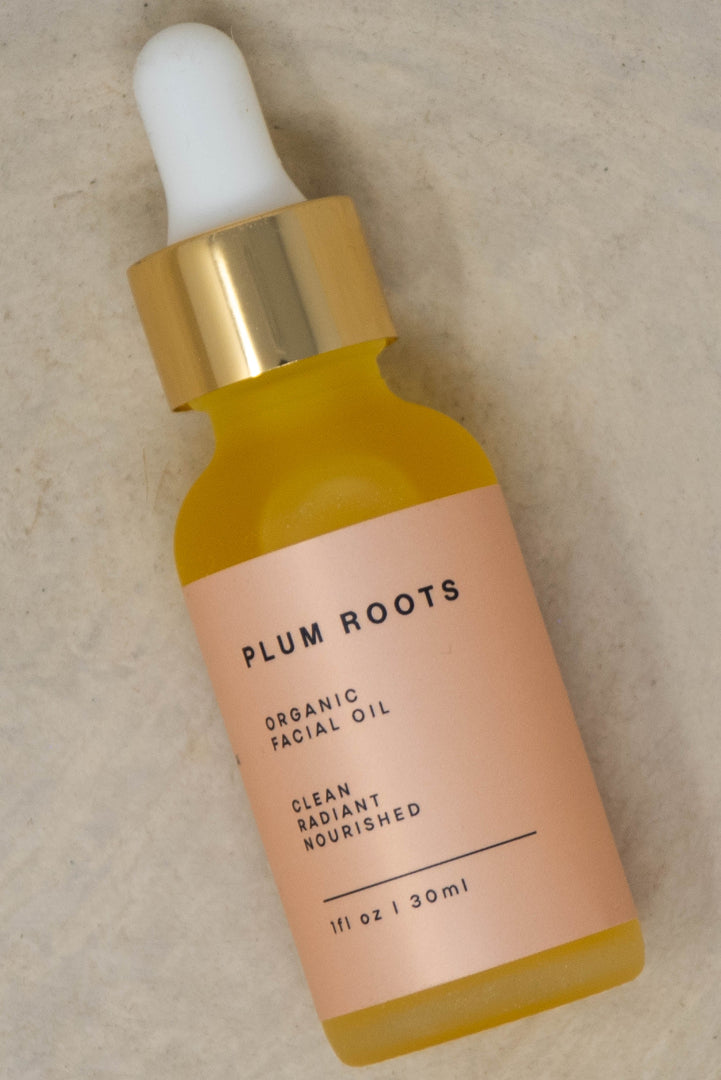
What Plum Roots Uses: The organic facial oil was formulated specifically for facial massage tools. It combines jojoba, rosehip, and argan in ratios designed for gua sha and facial cupping slip.
Application Technique: When and How Much
Most people either use too little oil and have to stop mid-routine to add more, or they use too much and the tool slips out of control. There is a sweet spot.
Step-by-Step Application for Gua Sha
Start with damp skin. After cleansing, pat your face gently with a towel but leave it slightly damp. Water helps the oil spread more evenly and extends the slip time.
Use 3-5 drops for your entire face. That sounds like less than you need, but oils spread further than you think. Dispense into your palm, rub your hands together briefly to warm it, then press it into your skin rather than rubbing.
Press, do not rub. Use your palms to press the oil into your face, starting at the center and moving outward. This preserves the even layer on the surface instead of absorbing it all into the first area you touch.
Check the glide before you start. Run your gua sha tool lightly across your cheek. It should move smoothly with no catching or dragging. If it does not, add one more drop to problem areas—usually the jawline and neck, which tend to be drier.
Apply more halfway through if needed. If you are doing a longer routine (10+ minutes), you may need to refresh the oil on certain zones. One additional drop is usually enough.
Morning vs Evening Application
Morning routines benefit from lighter oils that absorb quickly so you can apply sunscreen or makeup afterward. Rosehip and squalane work well here.
Evening routines can use richer oils like argan or blends with sea buckthorn. Your skin repairs itself overnight, so this is when heavier, more nourishing oils make sense.
Always do gua sha on freshly cleansed skin. Do not do it over makeup, sunscreen, or moisturizer you applied hours ago. Those layers create a barrier that prevents both proper slip and absorption of the fresh oil you are applying.
Common Mistakes That Cancel Out the Benefits
I have watched countless people attempt gua sha with the wrong products or application methods, then wonder why they are not seeing results. Here are the mistakes that undermine the entire practice.
Using Serum Instead of Oil
Water-based serums absorb too quickly. Even hyaluronic acid, which many people try to use for gua sha, does not provide enough slip. Serums are designed to sink in immediately—the opposite of what you need for a 5-10 minute massage routine.
If you want to use both serum and oil, apply the serum first, let it absorb for 30 seconds, then apply the oil on top. The oil layer will allow the tool to glide while the serum works underneath.
Applying Oil Over Dirty Skin
If you do gua sha over makeup, sunscreen, or sebum that has built up during the day, you are massaging those substances deeper into your pores. That leads to congestion and breakouts, not the clear skin you were hoping for.
Gua sha is a cleanse-first practice. Always.
Using Too Much Pressure to Compensate for Lack of Slip
When the tool is not gliding smoothly, the instinct is to press harder to force it across the skin. That is how you cause bruising, broken capillaries, and irritation.
If you find yourself pressing hard, the problem is not your technique. You need more oil.
Choosing Fragrant Oils for Sensory Experience
Essential oils smell beautiful, but they are also potential irritants, especially during massage when penetration is enhanced. Many popular facial oils contain lavender, rose, or citrus essential oils for scent.
If you have sensitive skin or are prone to reactivity, choose unscented or naturally scented oils. The base oils themselves often have a light, pleasant aroma without added fragrance.
Reality Check: If your face is red, irritated, or breaking out after gua sha, the tool is not the problem. The product you are using with it probably is.
Integrating Face Oil Into Your Full Routine
Gua sha does not exist in isolation. It is part of a larger skincare routine. Where the face oil fits depends on what else you are using and when you are doing your massage.
Morning Routine Structure
- Cleanse – Remove overnight oils and prepare skin
- Optional toner – Balance pH if your cleanser is alkaline
- Lightweight serum – Vitamin C or peptides work well here
- Face oil for gua sha – 3-5 drops, pressed into damp skin
- Gua sha massage – 5-8 minutes, focusing on lymphatic drainage
- Allow oil to absorb – Wait 2-3 minutes
- Eye cream – Apply to orbital bone area
- Sunscreen – Non-negotiable final step
Evening Routine Structure
- Double cleanse – Oil cleanse first to remove makeup/SPF, then water-based cleanser
- Exfoliant – AHA/BHA if using (2-3x per week, not daily)
- Treatment serum – Retinol, niacinamide, or targeted active
- Face oil for gua sha – 4-6 drops for evening, can be slightly more than morning
- Gua sha massage – 8-12 minutes, can include neck and décolletage
- Additional face oil or night cream – Optional extra nourishment after massage
The key principle: actives go on before the oil. Occlusives (thick creams, balms) go on after. The face oil you use for gua sha sits in the middle—after water-based treatments, before heavy moisturizers.
How Often to Do Gua Sha With Oil
Daily is ideal for maintenance and lymphatic drainage. Your lymphatic system needs regular stimulation to function optimally, and daily gua sha provides that.
If daily feels like too much, aim for 4-5 times per week. Less than three times per week and you lose the cumulative benefits.